Twenty-Five Years Since the Pocket Revolution
The original iPod’s debut two decades and a half ago reshaped how the world consumed music by fitting thousands of songs into a device the size of a card deck.
By Aever Bundji ·
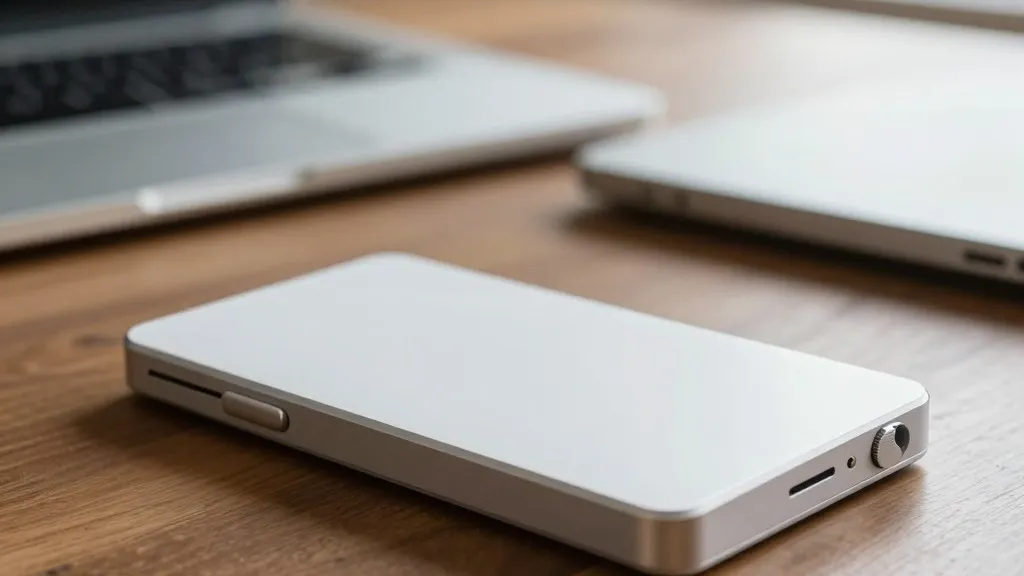
For nearly a quarter-century, the question of how to carry a personal music collection was a persistent friction point for consumers. While the technology existed, the experience remained fragmented and cumbersome. On October 23, 2001, that tension resolved with the unveiling of a device that would eventually define a generation’s relationship with sound. Apple CEO Steve Jobs stepped onto the stage to introduce a breakthrough digital device that was not a Mac, ultimately revealing the original iPod. This launch marked the beginning of a pocket-sized phenomenon that would serve as the preferred companion for gadget enthusiasts until smartphones eventually rendered dedicated music players obsolete.
The device launched with a specific price point of $399 and a bold promise: your entire music library, in your pocket. At the time of its release, Apple had already guided the company out of its beige hardware era into the Mac OS X period, with products like the iBook and iMac gaining traction. This revival occurred during a challenging economic climate shortly after the dot-com bubble burst. Jobs envisioned the Mac as the hub of a digital lifestyle, connecting cameras, camcorders, and portable players. He reasoned that music was a massive target market lacking a definitive leader, despite existing offerings from companies like Sony, Creative, and Sonic Blue.
Jobs acknowledged that competitors had not yet found the correct recipe for digital music. At the time, four mainstream portable solutions existed: CD players, MP3 CD players, flash players, and hard-disk-based jukeboxes. Apple chose the latter for its market entry. The resulting device offered CD-quality sound and supported MP3, WAV, and AIFF formats. Its 5GB storage capacity allowed it to hold 1,000 songs, specifically defined as 1,000 typical pop-length MP3s at 160Kbps. For the average user, this capacity effectively represented their entire personal collection.
The physical form factor was a critical differentiator, enabled by Toshiba’s 1.8-inch hard drive, which was 0.2 inches thick. The iPod measured 2.4 by 4 by 0.78 inches and weighed 6.5 ounces, making it lighter than most cell phones of the era. It featured 20-minute skip protection and charged via a single FireWire 400 cable. Jobs highlighted the speed advantage, claiming a full CD could transfer in five to ten seconds, compared to roughly five minutes via USB. Filling the device with 1,000 songs took an estimated 10 minutes, whereas a USB-based player would require five hours.
The device also featured a rechargeable lithium-polymer battery capable of 10 hours of continuous playback, with an 80% charge achievable in one hour. Design focused on minimalism and durability, with controls optimized for single-hand use. An accelerated scroll wheel with a piezoelectric clicker provided tactile feedback for navigating playlists, artists, or songs. During the initial demonstration, the song 'Building a Mystery' by Sarah MacLachlan was played. The third major advantage was Auto-Sync with iTunes, which launched simultaneously with version 2. This feature ensured that curated libraries on a Mac remained synchronized with the pocket player, while the device also functioned as a FireWire hard drive.
Although the first iPhone arrived in early 2007, the two products coexisted in Apple’s lineup for over a decade. The iPod’s prominence gradually diminished as smartphones matured, leading to the release of the final 7th-generation iPod Touch in May 2019. While the product line was left unmaintained for a period, it was not officially discontinued until May 2022, marking the end of an era for dedicated portable music.
Source: Tom's Hardware