New company aims to breed elite working dogs with high-tech gear
A startup backed by $200 million plans to use gene editing and advanced technology to create more resilient dogs for military and law enforcement use.
By Yasmin Farouk ·
A new venture has emerged from stealth with a mission to genetically engineer working dogs for the U.S. military and law enforcement sectors. The company, named Warhound, aims to address a growing shortage of qualified canines by developing animals with enhanced physical and mental traits. It also plans to equip these dogs with high-tech gear to improve their performance in dangerous environments.
Warhound has secured $200 million in funding from investors including Sequoia, 8VC, Corner Ventures, and In-Q-Tel. The latter is a venture firm supported by U.S. intelligence agencies. This investment values the company at $1.2 billion. The initiative is a collaboration between Ben Lamm of Colossal Biosciences and Palmer Luckey of Anduril. Lamm stated that he and Luckey first discussed the concept about a year ago at a conference, where Luckey expressed the need for better support for military working dogs.
The current supply of working dogs in the United States is increasingly reliant on imports from Europe. According to the company's launch announcement, more than 80% of the U.S. military's working dogs come from foreign sources. Furthermore, less than half of these imported animals are deemed fit for service. Warhound seeks to change this dependency by engineering dogs with specific characteristics suited to demanding missions. Lamm noted that many dogs fail training due to inherited issues such as poor eyesight, cancer, hip dysplasia, or muscle atrophy.
To create these new animals, the team is studying top-performing breeds, specifically the Belgian Malinois and the German Shepherd. They are collecting cell lines from these dogs and storing them in a biobank. The process involves editing the dogs' genes to add traits that improve performance and remove those that hinder health. The goal is to create a new type of dog that is healthier, longer-lived, and more agile. Lamm described the enhancements as improving speed, agility, and olfactory sensors for tasks like bomb sniffing.
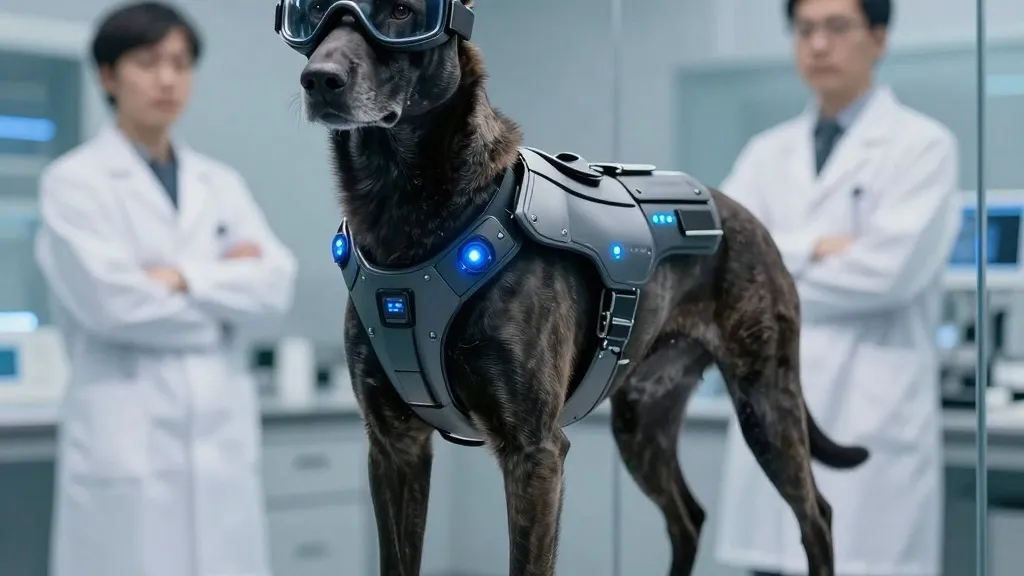
Anduril will provide the technological layer for these animals. The company will supply software and hardware, including protection vests and goggles, to assist the dogs and their handlers. This equipment is designed to provide situational awareness and coordination. Lamm suggested imagining bulletproof vests with data sensors that relay information to handlers, giving them a better understanding of the field. He emphasized that these additions are placed on top of the dog, not inside it, to make the animal safer and healthier.
Colossal Biosciences, known for its de-extinction efforts such as reviving the dodo and mammoth, holds equity in Warhound and licenses its technology to the new venture. Lamm explained that Colossal has been using AI and gene cloning technology to identify and copy animal genes. Viagen, another company owned by Colossal, will partner with Warhound to clone the dogs. Lamm noted that Viagen's technology has a high success rate in cloning, a process already used in Colossal's endangered species program.
The first batch of genetically engineered dogs is expected to be cloned and incubated soon, with births anticipated in early 2027. The company hopes these animals can begin service within two years. Warhound has not yet determined the price for the dogs but expects to sell them to first responders, the Department of Defense, military service groups, and police forces. Lamm confirmed that the company has briefed various government groups about the business and its plans.
Regarding the welfare of the animals, Warhound is working under the guidance of the American Humane Society. The organization will help certify the training program for the new dogs. The company also hopes that when these military dogs retire, they will enter the Society's Military Working Dog Reunification Program, which provides homes for retired service animals. The American Humane Society stated that it applauds Warhound and Colossal for inviting them to help ensure the animals are treated humanely.
Source: TechCrunch