Federal Rule Proposes Cyan Lights For Robotaxis
Regulators are seeking a unified lighting standard to help road users identify automated vehicles on the highway.
By Lucia Herrera ·
The debate over how driverless vehicles should communicate their status to the public has moved from theoretical discussions to concrete regulatory action. The federal government has officially entered the conversation with a specific proposal for visual signaling.
The National Highway Traffic Safety Administration has released proposed revisions to Federal Motor Vehicle Safety Standard No. 108. These changes specifically target autonomous vehicles by rewriting existing rules to accommodate designs that lack human drivers. The proposal aims to streamline regulations for robotaxis while establishing a standardized method for these vehicles to interact with their surroundings.
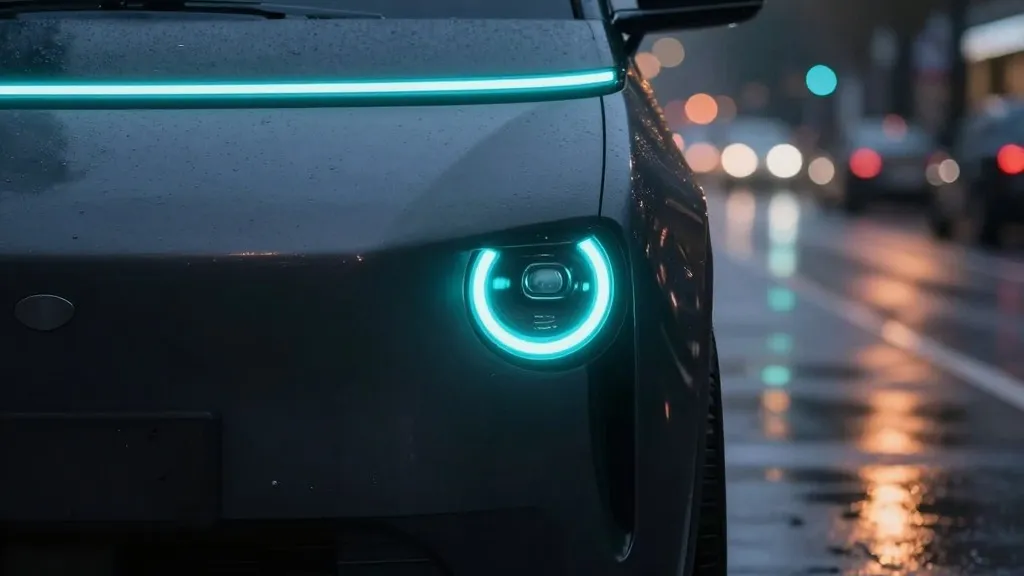
A central component of this new framework is the introduction of cyan-colored marker lamps. The agency proposes these blue-green lights to provide a clear and consistent signal to law enforcement and other motorists that an automated driving system is in control. This distinct color choice addresses a specific gap in current traffic lighting conventions.
The selection of cyan is driven by the need to avoid confusion with existing automotive signals. The auto industry currently reserves red for braking, amber for turn signals, and white for headlights. Flashing blue and red lights are generally associated with emergency vehicles. By utilizing a blue-green hue, regulators believe they can fill a visual void without overlapping with established meanings for other road users.
There is some historical context for this approach, even if previous attempts did not reach national scale. Mercedes-Benz secured state-level approval for turquoise lights on its Level 3 Drive Pilot vehicles. Although the automaker eventually abandoned that specific plan in favor of a different system, the precedent supports the idea of using non-standard colors to denote automation.
The proposed rule makes cyan marker lights optional for manufacturers. However, if companies choose to install them, they must adhere to official federal standards regarding color, brightness, and placement. This requirement ensures that any automaker or robotaxi operator adopting the technology uses a consistent and legal setup. The goal is to prevent a chaotic mix of different colors and signals that could confuse drivers and pedestrians.
Beyond the new lighting requirements, the agency is proposing to remove several legacy rules that no longer apply to vehicles without human drivers. Current regulations mandate physical hazard switches, manual beam shifters, and turn levers inside the cabin. These components are unnecessary for autonomous operation. The proposal would eliminate these requirements while also updating the 12.8-volt testing standard. This update allows manufacturers to design around modern LED architectures without facing unnecessary administrative hurdles. The agency is also reconsidering rules that dictate the vertical positioning of high-beam and low-beam lights.
This regulatory update is part of a broader effort by the Department of Transportation to facilitate the deployment of autonomous vehicles. The government aims to make it easier for manufacturers to build cars that omit traditional controls like steering wheels and pedals. These features are designed for human operation and often complicate the engineering of fully autonomous systems.
Despite these streamlined proposals, regulators continue to enforce existing standards strictly where applicable. Last month, NHTSA initiated an audit query into the Tesla Cybercab. The review examines the technical data and certification process used by Tesla for the vehicle. The focus is on the absence of specific design features, such as sideview mirrors, pedals, and a steering wheel, which are required under current federal safety standards.
The outcome of this proposal will determine how the next generation of robotaxis interacts with the rest of the road. If adopted, the cyan light will become a common sight, providing a simple and immediate visual cue that the car is driving itself. This standardization is expected to reduce friction for operators like Waymo, Nuro, and Zoox, as well as major automakers like GM and Mercedes.
Source: The Verge