$1.1 Million in Shares Back Question on Tesla's New Q2 2027 FSD Deadline
Tesla has set a new target for unsupervised driving, but the feature will initially be restricted to specific managed fleet zones rather than offering universal autonomy for all owners.
By Camila Rodriguez ·
The tension surrounding Tesla’s autonomous driving roadmap reached a critical flashpoint this week, as the company officially pegged the launch of unsupervised Full Self-Driving (FSD) in customer-owned vehicles to the second quarter of 2027. While this date provides a concrete timeline for investors and consumers, the specific conditions attached to that rollout suggest a significant narrowing of the product’s scope compared to the broader promises made over the last decade.
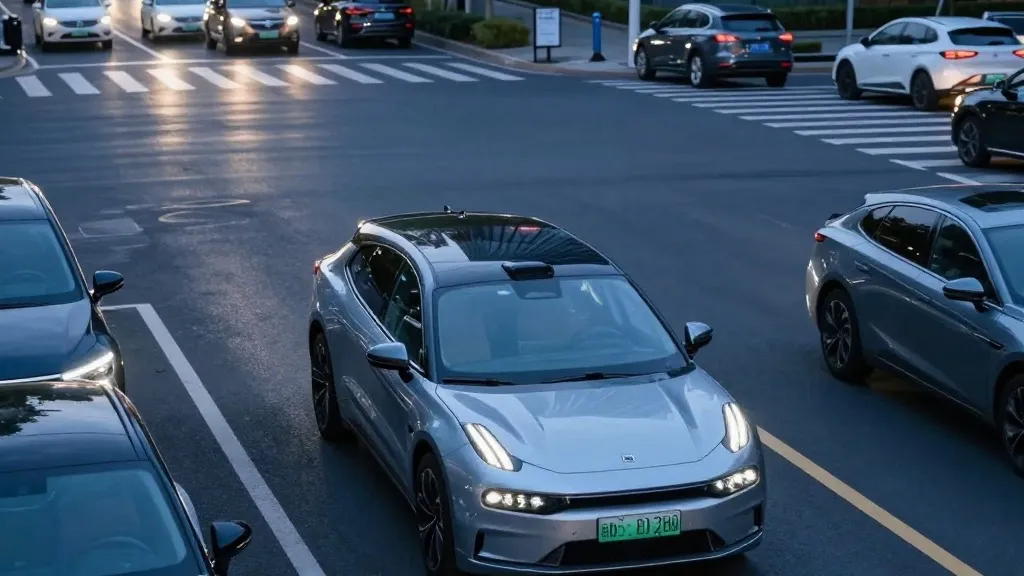
On the Q3 2026 earnings call, AI chief Ashok Elluswamy clarified the mechanics of this release. The primary contention is that the initial unsupervised capability will not function as a universal software update allowing owners to drive anywhere. Instead, Elluswyamy described the process as owners integrating their personal vehicles into Tesla’s managed Robotaxi fleet. Consequently, the autonomy is limited to the specific geographic areas where Tesla already operates its commercial robotaxi service.
This clarification came in response to a top-tier shareholder question submitted for the call, which represented approximately 1.1 million shares of retail investor interest. The core inquiry asked when unsupervised FSD would become available in customer cars. Elluswamy’s answer of Q2 2027 serves as the latest milestone in a long series of timeline adjustments, yet the framing indicates that the first step is fleet integration rather than individual user freedom.
The practical implications of this restriction are substantial, as Tesla’s current Robotaxi footprint is geographically limited. The service currently operates in six U.S. metropolitan areas, but the service areas within those cities are relatively small geofences. For instance, the Miami zone covers only a portion of West Miami and a strip extending toward Doral and Sweetwater. Similar limited geofences were established in Orlando and Tampa in July. Within these zones, the vehicles primarily utilize low-speed routes and avoid highways and complex urban environments.
Regulatory constraints further complicate the picture, particularly in the Bay Area, where the service is not yet fully unsupervised. California regulations require a safety driver in every vehicle because Tesla has not yet released the necessary data to the California DMV to move beyond a level 2 autonomous system classification. This regulatory hurdle stands in contrast to the company’s broader commercial ambitions.
The scale of the current operation remains modest relative to previous executive statements. Tesla reported that its Robotaxi service reached nearly 2 million cumulative unsupervised miles by the end of Q3 2026, a figure achieved one month after the Cybercab model joined the Austin fleet. However, third-party tracking data from earlier this year indicated that the number of fully driverless Teslas on the road remained in the dozens, a figure significantly lower than the hundreds of thousands previously discussed by Elon Musk.
Competitive dynamics also weigh on the market perception of this timeline. Waymo, a key competitor in the autonomous space, had already established operations in both Orlando and Tampa before Tesla’s entry into those markets. Waymo has accumulated over 3 million miles of driving data, highlighting the gap in operational scale between the two firms. This competitive pressure underscores the urgency for Tesla to solidify its position in the autonomous driving sector.
The shift in product definition represents a move away from the long-standing pitch that FSD would eventually allow a car to drive itself anywhere via a simple update. Musk had told investors in July 2025 that unsupervised FSD would be available for personal use in certain geographies by the end of that year. A year prior, he expressed surprise if the technology was not available the following year. Now, the target is pushed to Q2 2027, with the product defined by fleet membership rather than individual ownership rights.
Additional complications exist for hardware owners, specifically those with HW3 computers who purchased FSD. These owners have been informed that their current hardware cannot run unsupervised FSD, and no clear upgrade path has been presented. Elluswamy cited safety as the primary bottleneck for the technology’s expansion, noting that Tesla limits itself to lower-speed roads to mitigate risk. He suggested that these safety issues could be resolved within the next year, though he acknowledged the uncertainty of that timeline.
For the market, the Q2 2027 date is less about the specific month and more about the structural change in how the technology is delivered. The transition from a consumer software feature to a managed fleet service alters the value proposition for shareholders. Investors must now evaluate the promise against the reality of small geofences, regulatory hurdles in key states like California, and the modest current scale of the driverless fleet. The coming quarters will test whether Tesla can expand these zones and increase the fleet size to match the revenue expectations built around the FSD brand.
Source: Electrek